Kindergarten reading

Find read aloud books for kindergarten free

Read aloud books for kindergarten free can support listening, vocabulary, and classroom routines when the text is short, clear, and easy to revisit. Use this guide to choose a suitable story and prepare it for spoken delivery.

Review every source before use

Scenario checklist

What this scenario must deliver

A useful kindergarten story is more than a book title. It should give the adult a manageable read-aloud, the child a clear listening path, and the group a simple way to respond.

Each item needs a practical boundary

Free access does not automatically mean a story is suitable for a kindergarten group. Check the text, source, and setting before you use it aloud.

A free page may not be reusable

A story that can be viewed without payment may still have copyright, classroom-use, or recording restrictions.

Workaround

Prefer clearly licensed, public-domain, or institutionally provided material, and keep the source details with your lesson notes.
A book may be too long for one sitting

Long chapters, dense descriptions, or many characters can make young listeners lose the thread.

Workaround

Choose a short selection, mark natural stopping points, or split the reading across more than one session.

Text-to-speech may misread picture-book language

Names, rhyme, repeated refrains, and expressive dialogue can sound flat or be pronounced incorrectly by an automated voice.

Workaround

Preview the passage, correct obvious pronunciation issues, and use a human voice for lines where expression carries meaning.

A free story may not fit your group

A story can be gentle but still contain vocabulary, themes, or cultural references that need explanation for a particular class.

Workaround

Read it first, identify unfamiliar words, and prepare one short context note rather than interrupting every sentence.

Simple workflow

The quality bar

Use a repeatable preparation routine so the story remains accessible without becoming over-scripted.

  1. 1

    Choose for listening, not only for reading

    Look for a focused plot, a small cast, predictable structure, and language that can be understood when heard once. Repetition is useful when it gives children a phrase they can anticipate.

  2. 2

    Mark the moments that need a voice

    Underline names, dialogue, repeated lines, and key vocabulary. Decide where to slow down, pause, or change emphasis, then keep those choices consistent during the session.

  3. 3

    Add one response path

    Prepare a single question, drawing task, retell prompt, or partner turn. The response should help children show what they heard rather than test every detail of the story.

Use it well

Kindergarten teacher

You need a short story for circle time and want the group to stay with one clear idea.

Select a repeated structure, preteach two or three words, and pause only at the moments that support prediction or retelling.

read aloud books online

Family member

You want a calm home activity but do not want to spend the evening searching through unsuitable pages.

Choose a story with a clear beginning, middle, and end, then let the child answer one question or draw a favorite scene afterward.

stories read aloud online for free

Library or literacy volunteer

You are preparing a small-group reading slot for children with different listening stamina.

Keep the passage brief, explain one unfamiliar word, and invite each child to contribute a sound, prediction, or remembered detail.

reading aloud examples

Early-years tutor

You need spoken practice that supports vocabulary without turning story time into a worksheet.

Use expressive phrasing, repeat the target words naturally, and finish with an oral retell using the child’s own sequence.

read aloud books online

Selection table

A strong kindergarten read-aloud
A weak fit for spoken reading

Sentence length

A strong kindergarten read-aloud

Short or varied sentences that can be followed when heard.

A weak fit for spoken reading

Long, nested sentences that require rereading on the page.

Vocabulary

A strong kindergarten read-aloud

A few new words supported by context, pictures, or brief explanation.

A weak fit for spoken reading

Many unfamiliar terms introduced without enough context.

Story structure

A strong kindergarten read-aloud

A clear sequence with a beginning, change, and understandable ending.

A weak fit for spoken reading

Events jump around or depend on background knowledge.

Repetition

A strong kindergarten read-aloud

Recurring phrases help children predict, join in, or remember.

A weak fit for spoken reading

Repeated wording feels accidental or adds no listening support.

Voice performance

A strong kindergarten read-aloud

Dialogue and action give the reader natural places to pause and vary tone.

A weak fit for spoken reading

Most lines have the same rhythm and offer few expressive cues.

Follow-up

A strong kindergarten read-aloud

One simple prompt can lead to a retell, drawing, movement, or connection.

A weak fit for spoken reading

The activity requires a long written answer or many recall questions.

Source clarity

A strong kindergarten read-aloud

The provider, license, or access terms are easy to identify.

A weak fit for spoken reading

The page gives no clear indication of ownership or reuse terms.

Before and after

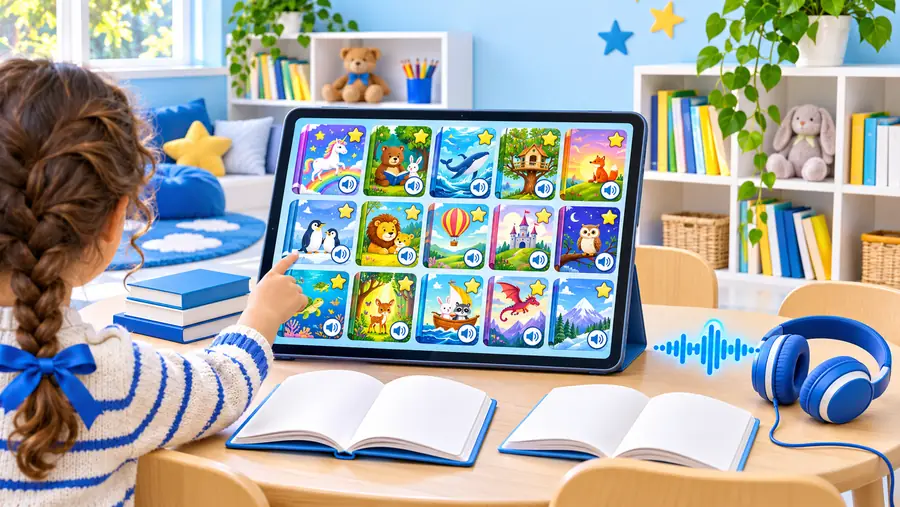
A busy story selection screen for kindergarten reading Unprepared selection
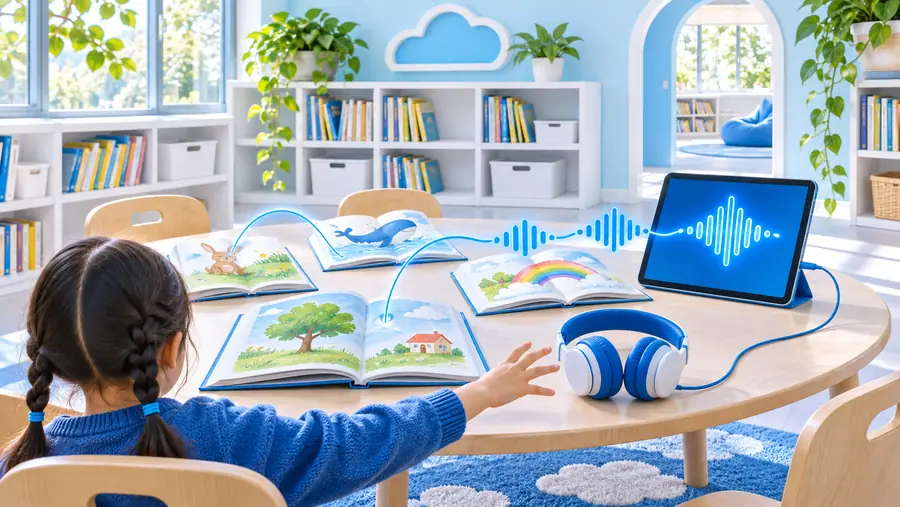
A prepared read-aloud story view with clearer listening cues Ready to read aloud
The improvement is in the preparation: a focused story, marked expression, and one clear response task make the session easier to follow.

Ready to prepare

Turn a promising story into a usable session

Start with a story that matches the children’s listening level, check the source, and shape the reading around one simple purpose. A little preparation helps the adult sound confident while leaving room for children to react, predict, and retell.

Prepare a story guide
  • Choose language children can follow by ear
  • Mark pauses, names, and repeated lines
  • Keep one response activity ready

Scenario FAQ

Scenario FAQ

Look for public-domain collections, libraries, schools, museums, and publishers that clearly provide access or permission. Check the source terms before reading a story to a group, recording it, or sharing a copy.

Choose a focused story with manageable length, clear sequencing, understandable vocabulary, and some repetition. It should make sense when heard, not only when a child can stop and study the page.

You can use an online story when the source permits the intended classroom activity and the content suits your group. Preview the page, confirm access, and prepare a backup in case the connection or presentation changes.

Not necessarily. A short complete story can work well, while a longer book may be better divided at natural breaks; choose the structure that helps children retain the main sequence and enjoy listening.

Try text to speech
Try text to speech